
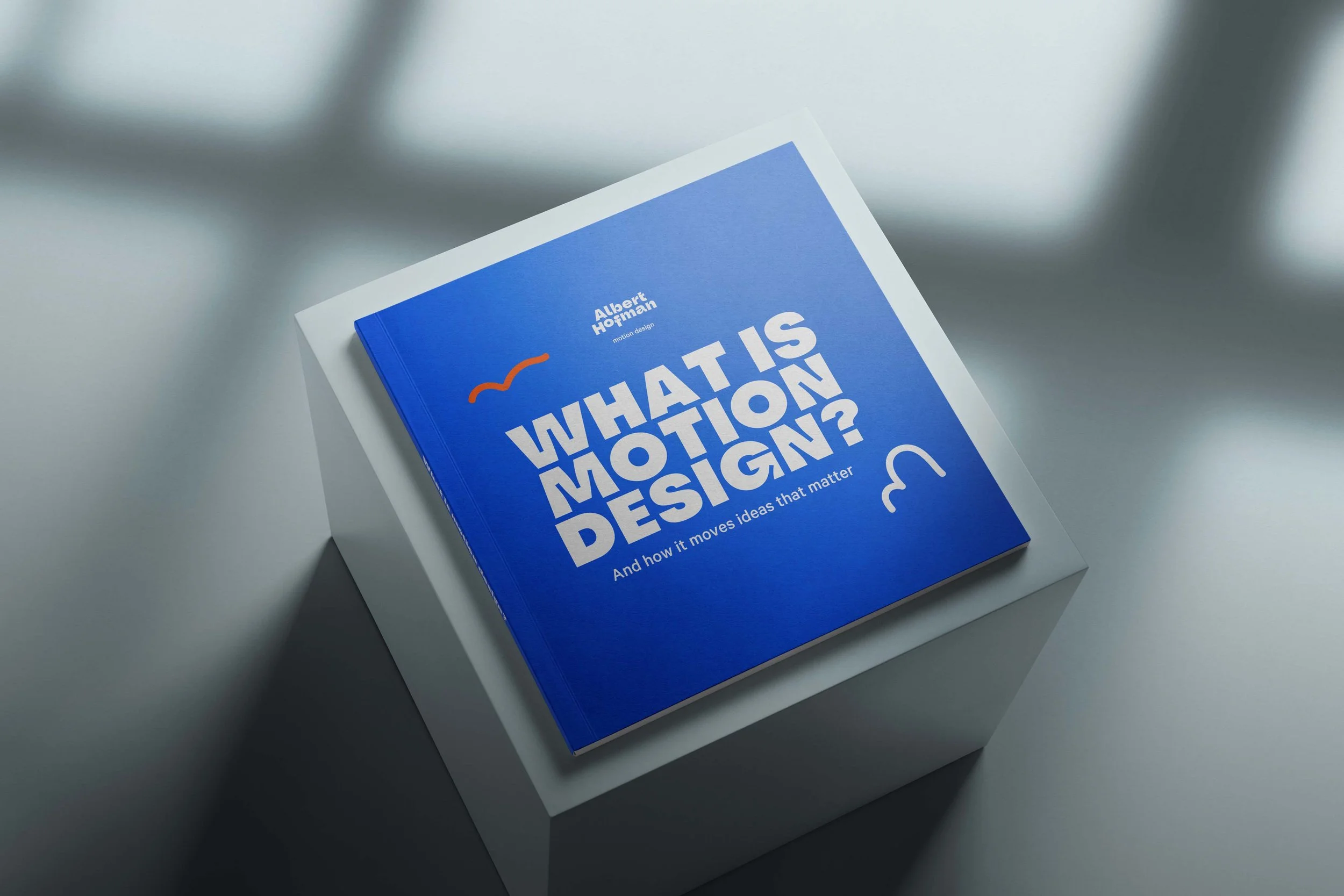
Mini course: What is motion design?
In a world overflowing with noise, even the most important ideas can be overlooked. This free mini-course is designed for changemakers, nonprofits, and purpose-driven organizations who want to communicate clearly, emotionally, and effectively. Using the power of motion design.
You’ll learn what motion design is, why it works, and how it can help you bring complex ideas to life in a way that grabs attention and builds understanding. Whether you’re launching a campaign, explaining your impact, or looking to inspire action, motion design offers a visual toolkit that can make your message land and move.
-
-
-
Lesson 2.1 — A clear definition
Motion design means bringing graphic elements to life through animation. This lesson covers what that means in practice.
Motion design means bringing graphic elements to life through animation. This lesson covers what that means in practice.
-
Lesson 2.2 — What makes it unique
Motion design is flexible, stylized, and built entirely through design. You’ll see what sets it apart from live-action video.
Motion design is flexible, stylized, and built entirely through design. You’ll see what sets it apart from live-action video.
-
Lesson 2.3 — Common formats
From explainer videos and looping posts to animated infographics and UI demos. This lesson breaks down the most-used formats.
From explainer videos and looping posts to animated infographics and UI demos. This lesson breaks down the most-used formats.
-
-
-
Lesson 3.1 — Grabbing attention
Movement stands out on busy screens. This lesson shows how motion gives you those first critical seconds to connect.
Movement stands out on busy screens. This lesson shows how motion gives you those first critical seconds to connect.
-
Lesson 3.2 — Making the complex clear
Learn how motion design helps people understand and remember complex ideas by turning them into visual stories.
Learn how motion design helps people understand and remember complex ideas by turning them into visual stories.
-
Lesson 3.3 — Creating emotional connection
When paired with music and pacing, motion creates tone and emotion. It helps your audience feel something, not just understand it.
When paired with music and pacing, motion creates tone and emotion. It helps your audience feel something, not just understand it.
-
Lesson 3.4 — Communicating efficiently
A short animation can say more than a full page of text. This lesson covers how motion gets your message across faster.
A short animation can say more than a full page of text. This lesson covers how motion gets your message across faster.
-
Lesson 3.5 — Working across platforms
From social media and events to internal communication, motion design adapts easily to different channels and goals.
From social media and events to internal communication, motion design adapts easily to different channels and goals.
-
-
-
Lesson 4.1 — Climate and sustainability
Learn how animation helps visualize data, explain systems, and drive campaigns in the climate space.
Learn how animation helps visualize data, explain systems, and drive campaigns in the climate space.
-
Lesson 4.2 — Tech and innovation
See how tech companies use motion to showcase products, onboard users, and add personality to digital experiences.
See how tech companies use motion to showcase products, onboard users, and add personality to digital experiences.
-
Lesson 4.3 — Education and nonprofits
Explore how motion design helps people learn, understand, and act through clear and accessible visuals.
Explore how motion design helps people learn, understand, and act through clear and accessible visuals.
-
Lesson 4.4 — Health and well-being
This lesson covers how animation explains medical and emotional topics with clarity and care.
This lesson covers how animation explains medical and emotional topics with clarity and care.
-
Lesson 4.5 — Civic and government
Learn how motion builds trust and participation by turning policies, data, and public programs into simple, visual stories.
Learn how motion builds trust and participation by turning policies, data, and public programs into simple, visual stories.
-
-
-
Lesson 5.1 — Start with purpose
Effective motion design begins with a goal. Every choice should support what you’re trying to say.
Effective motion design begins with a goal. Every choice should support what you’re trying to say.
-
Lesson 5.2 — Use story structure
Even a 45-second video needs a clear beginning, middle, and end. This lesson shows how to shape a short story that sticks.
Even a 45-second video needs a clear beginning, middle, and end. This lesson shows how to shape a short story that sticks.
-
Lesson 5.3 — Stay visually consistent
Design choices should match your brand’s tone. Learn how to create animations that feel intentional and on-message.
Design choices should match your brand’s tone. Learn how to create animations that feel intentional and on-message.
-
Lesson 5.4 — Make sound work for you
Sound adds emotion, clarity, and rhythm. This lesson looks at how voice, music, and silence help your story land.
Sound adds emotion, clarity, and rhythm. This lesson looks at how voice, music, and silence help your story land.
-
Lesson 5.5 — Design for the platform
Instagram, websites, and events all ask for different formats. Here’s how to adapt your motion design for each use.
Instagram, websites, and events all ask for different formats. Here’s how to adapt your motion design for each use.
-
Lesson 5.6 — Keep it inclusive
Accessible motion design helps your message reach more people. You’ll learn how to design with subtitles, contrast, and diversity in mind.
Accessible motion design helps your message reach more people. You’ll learn how to design with subtitles, contrast, and diversity in mind.
-
Lesson 5.7 — Simplicity is powerful
The best animations are often the simplest. This lesson explains why less movement and more clarity usually works better.
The best animations are often the simplest. This lesson explains why less movement and more clarity usually works better.
-
-
-
Lesson 6.1 — Ask the right questions
Before you create anything, define your goal, audience, message, tone, and context. This lesson walks you through each one.
Before you create anything, define your goal, audience, message, tone, and context. This lesson walks you through each one.
-
Lesson 6.2 — DIY or collaborate
Find out when to use free tools like Canva or Adobe Express, and when to work with a motion designer.
Find out when to use free tools like Canva or Adobe Express, and when to work with a motion designer.
-
Lesson 6.3 — What a motion designer brings
A motion designer is more than a technician. Learn how a creative partner can help shape your message from start to finish.
A motion designer is more than a technician. Learn how a creative partner can help shape your message from start to finish.
-
-